CAMPO IMPERATORE
Length: 8 kilometres
Elevation gain: 750 metres
Time: Four hours
Parking: Parking area at Campo Imperatore. Coordinates: 42.443028, 13.559279, What3words: ///pleat.grudges.unthinkable
Best time to go: Late May to mid October; in the winter months it’s a ski resort and as such will be covered in snow and inaccessible by car
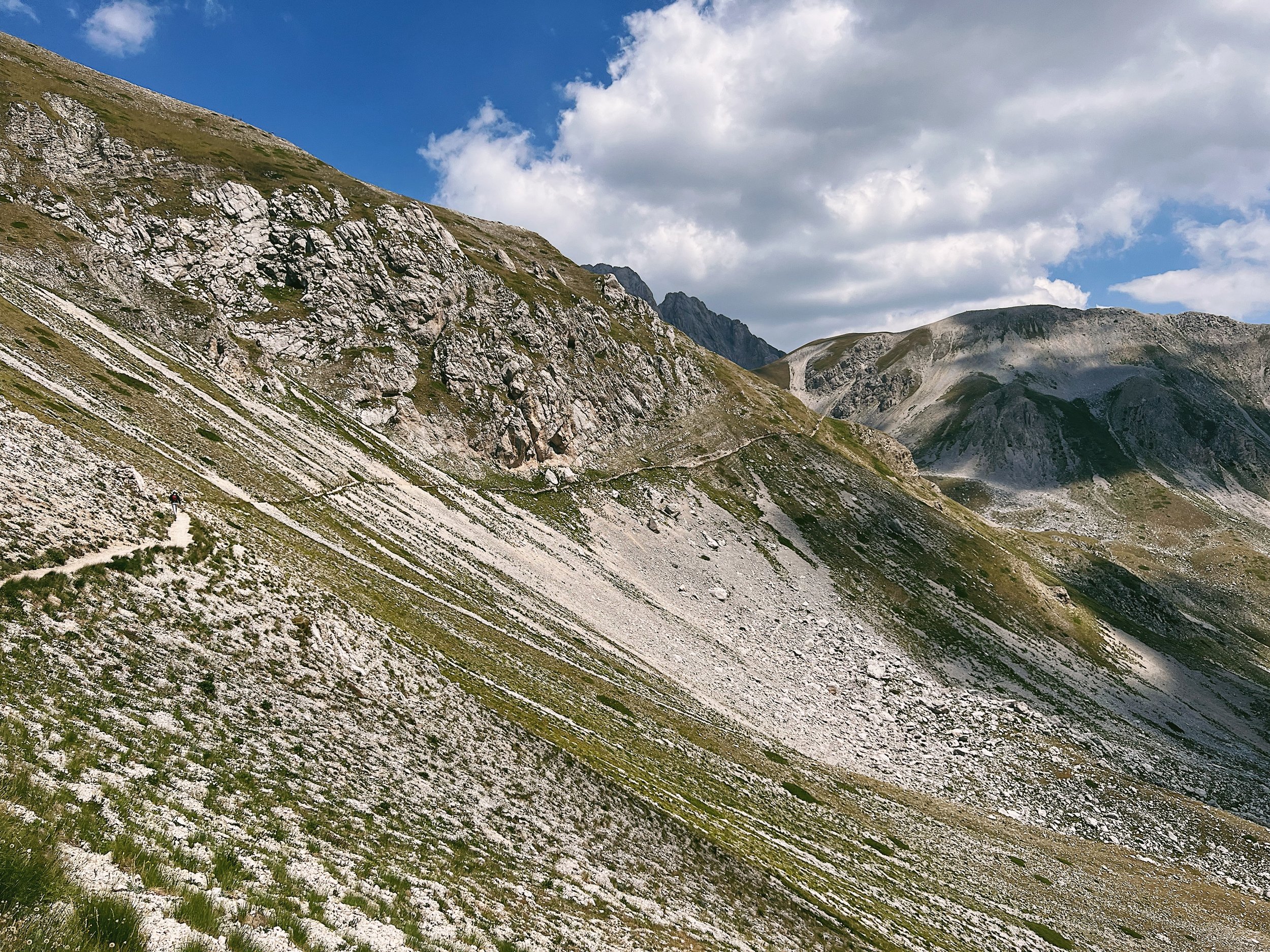
Terrain: Narrow single track, some technical sections and steep steps
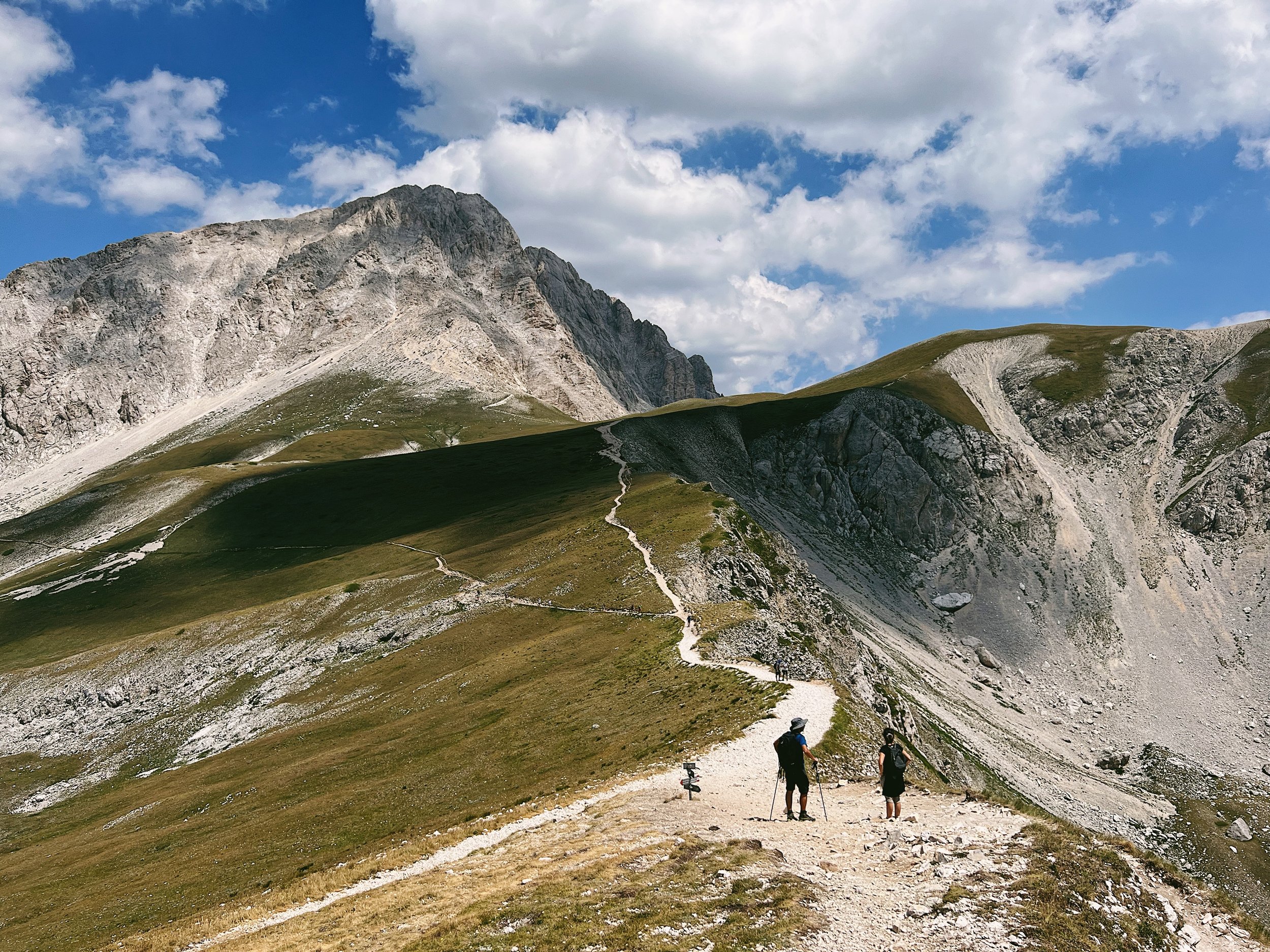
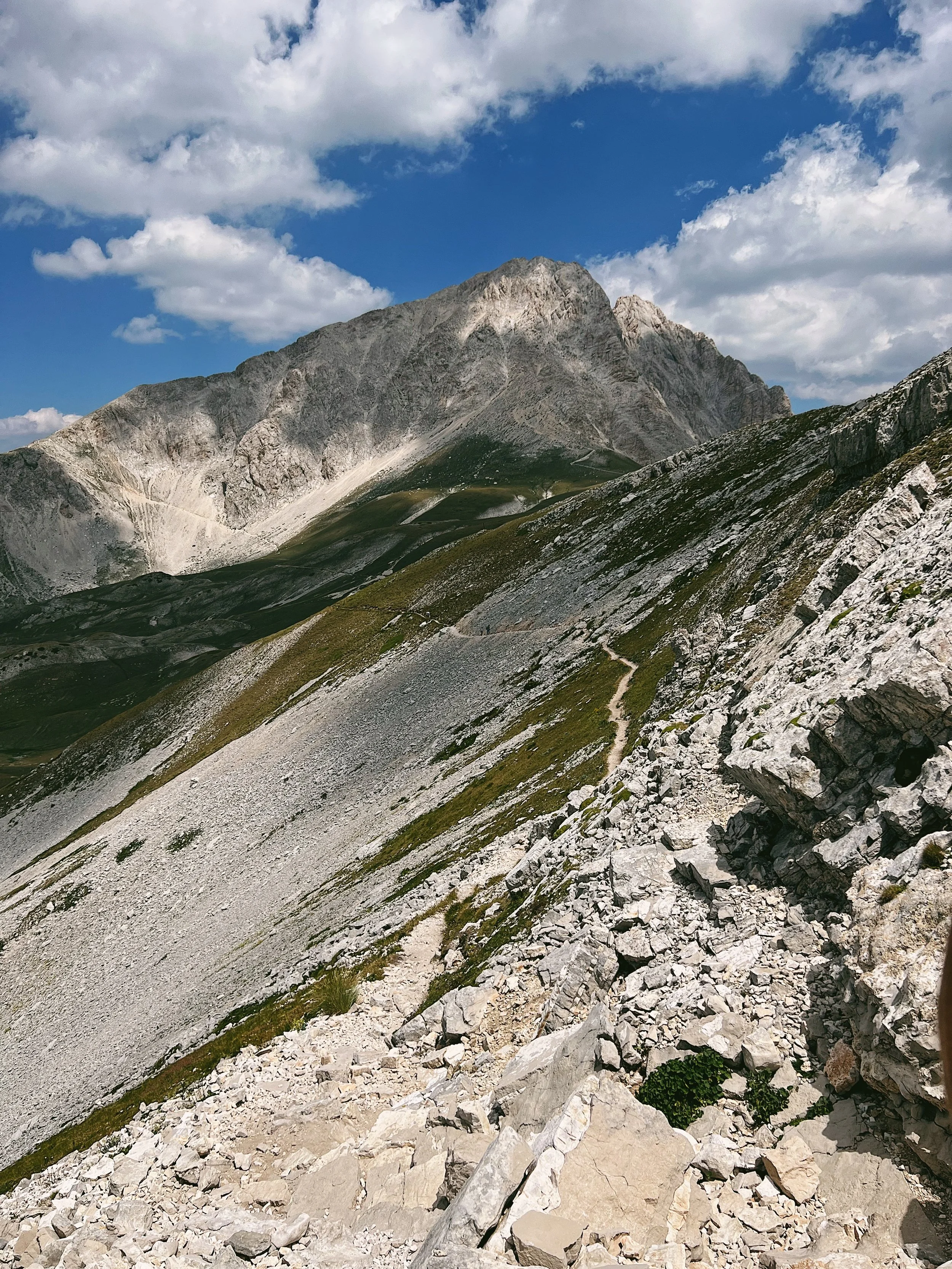
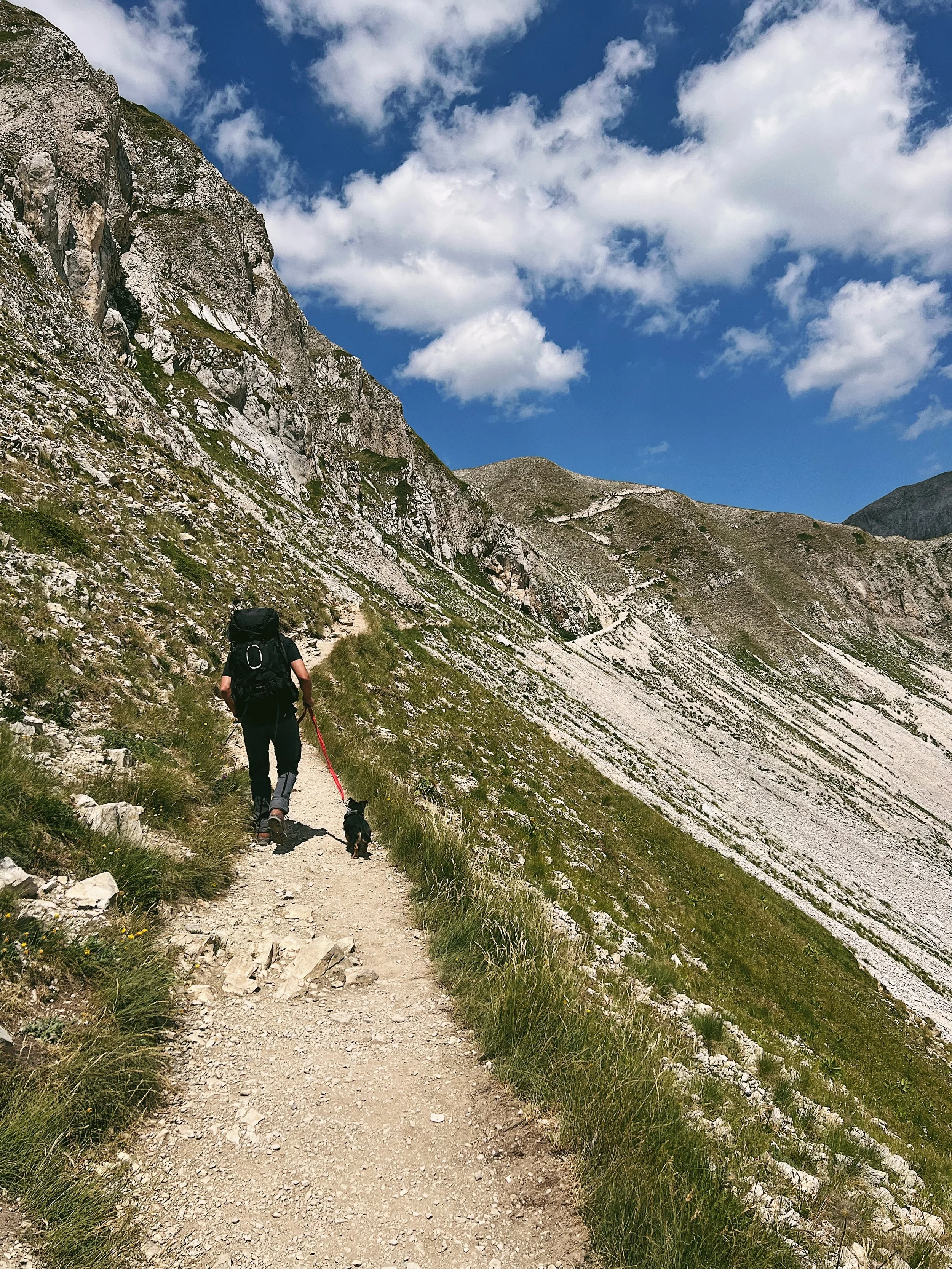
Level: Hard. The footing is loose and slippery, there are many steep drops to either side of the ridge line and some scrambling sections
Suitable for children: Older children and teenagers only, there is an alternative which is better suited to families
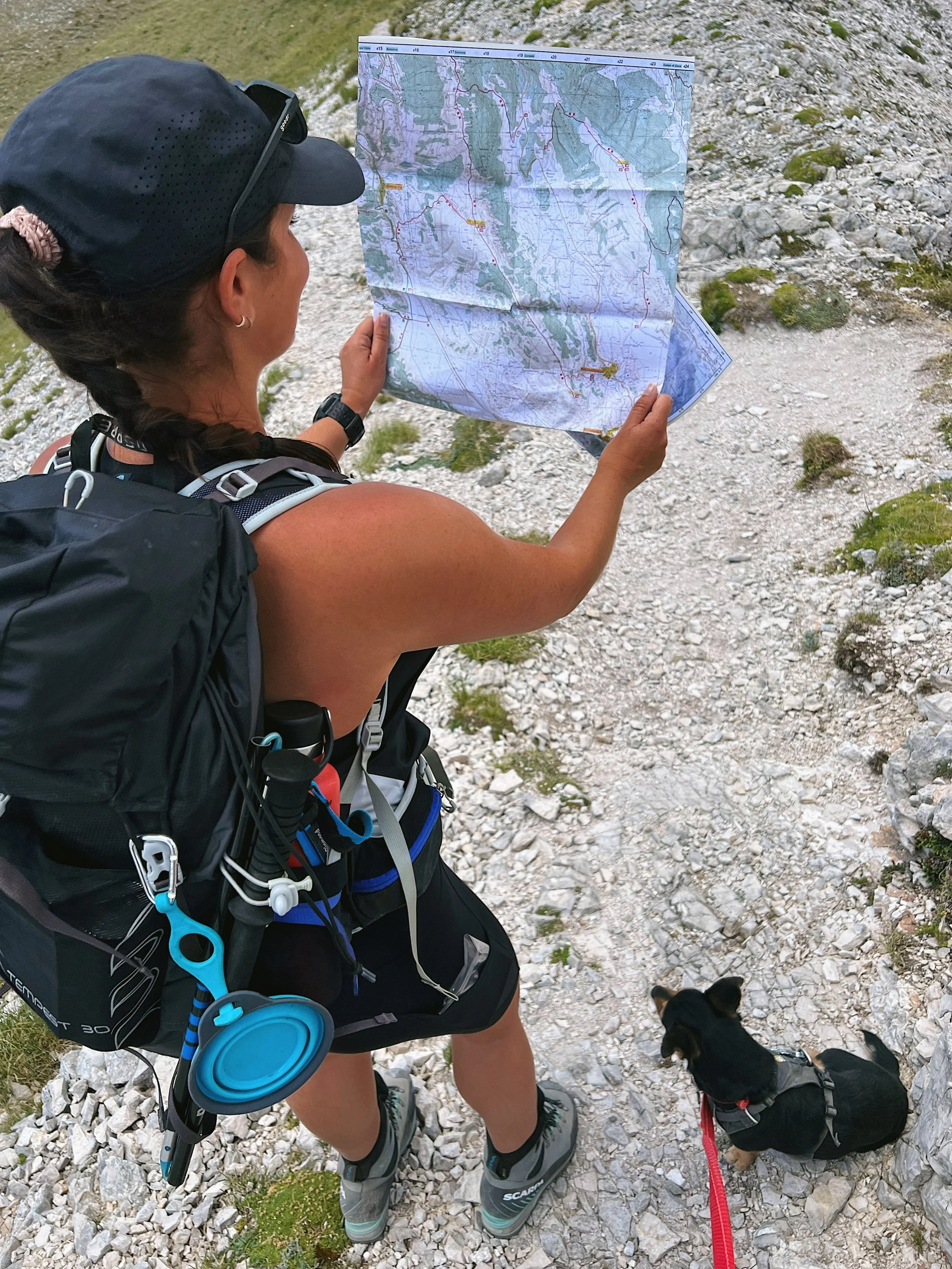
Suitable for dogs: Yes, but recommended to keep on a lead as it is heavily trafficked and there are steep drops
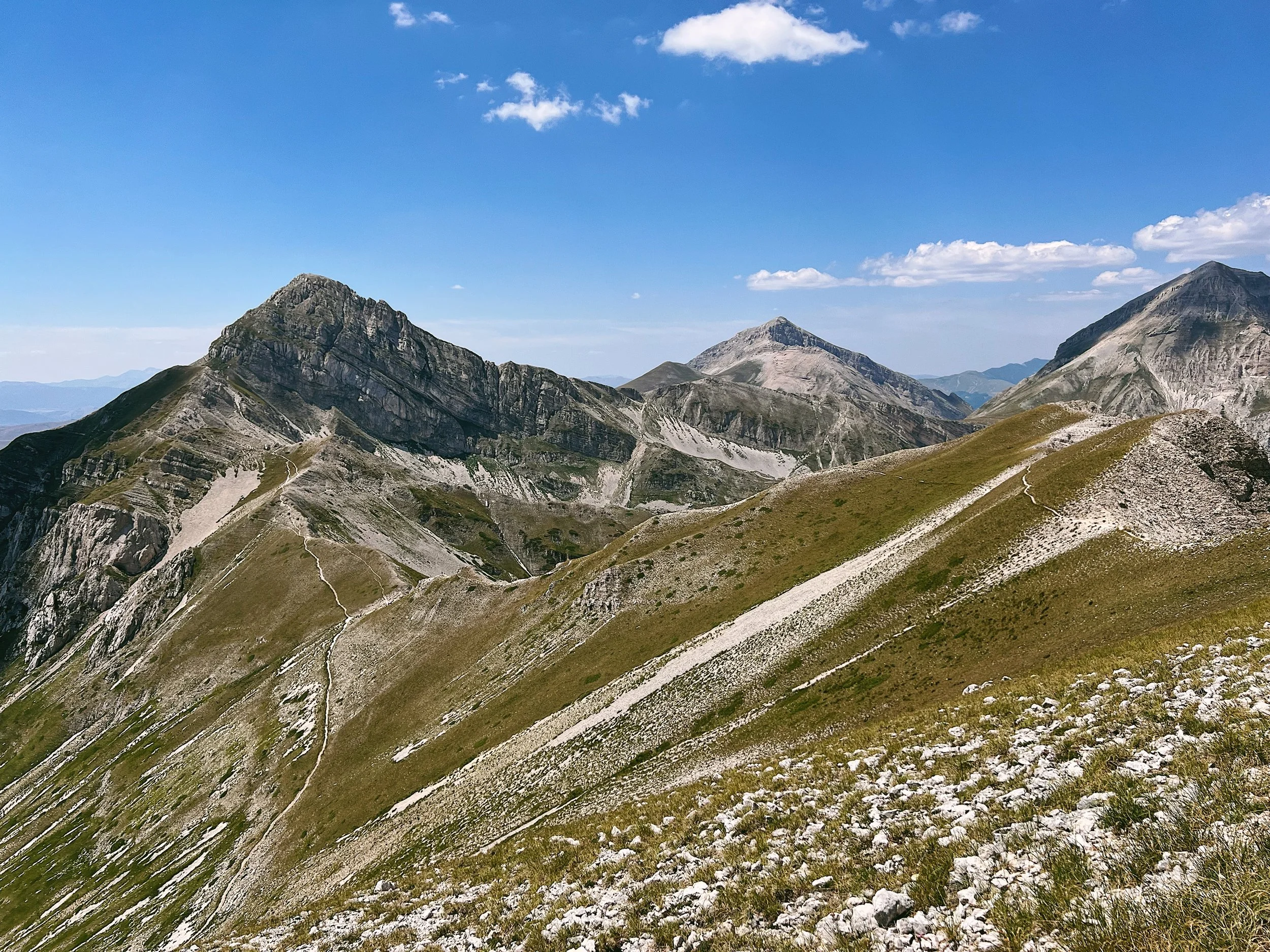
Campo Imperatore: a high mountain adventure in Italy’s captivating ‘Little Tibet’
Abruzzo is one of Italy’s least densely populated areas; there are - seemingly - more sheep than people, and almost half of the region is protected by either national park or nature reserve, which are home to more than 75% of Europe’s plant and animal species, including wolves, bears, golden eagles and chamois. The most beautiful part of Abruzzo is arguable the high mountain area of Gran Sasso, which is where you’ll find Italy’s ‘Little Tibet’, so called because of its wide, open plateaux which are grazed by cattle, sheep and horses, and its craggy, snow-dusted peaks. The highest point of Gran Sasso is Corno Grande, which at 2912 m is the highest peak in mainland Italy outside of the Alps, and on the northern cwm is one of Europe’s southernmost glaciers, Ghiacciaio del Calderone, though it is rapidly disappearing due to climate change. In 1794 the Calderone had an estimated volume of over 4 million cubic metres; by 1990 it had decreased to just under 361,000 cubic metres and in 2016 it disappeared over the summer due to droughts. It’s possible to view the glacier when summitting Corno Grande, which is possible on the ‘Harder Route’ - see below.
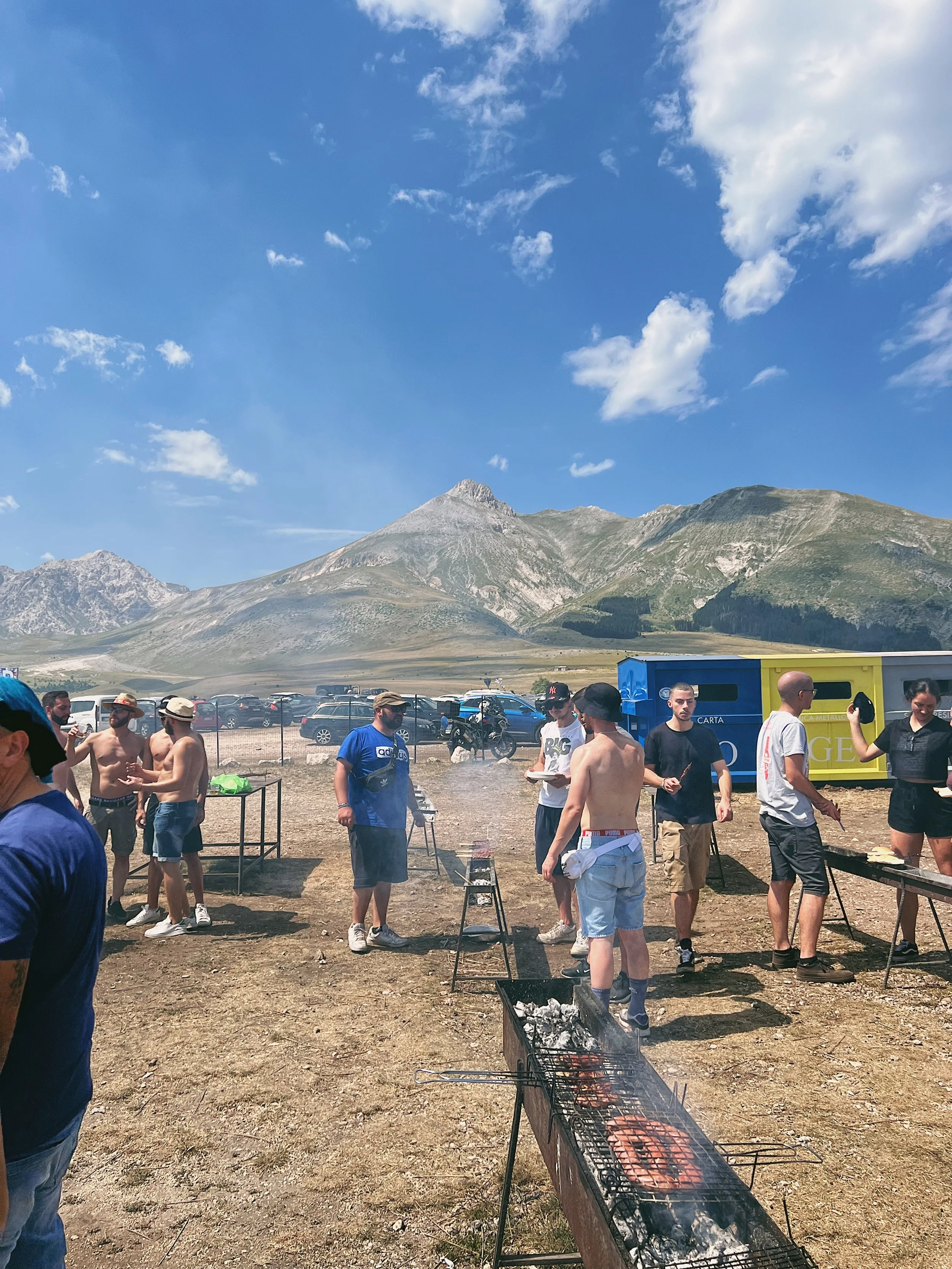
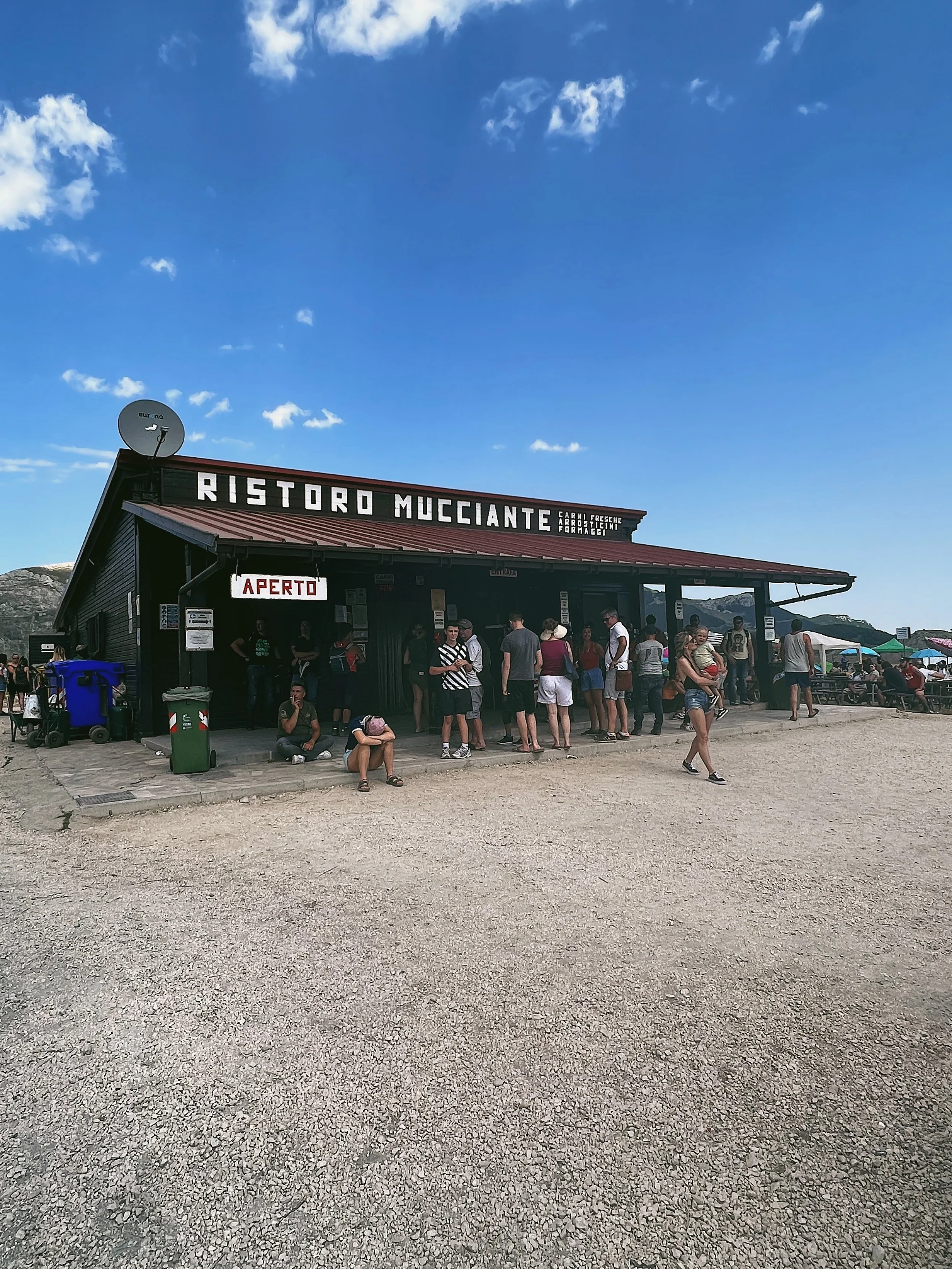
The route that I have written about is a fairly classic exploration of Gran Sasso - beginning at Campo Imperatore, a 27km-long alpine pasture, ascending a ridge to look down into the magnificent Conca dell’Oro natural bowl below, a stop at a mountain rifugio and a long, picturesque descent with far-reaching views. You’ll definitely need a car for this one, as it’s so remote and there’s no public transport available. Plus, once you’ve finished your hike, the lure of Ristoro Mucciante’s barbecued lamb skewers and sausages is too hard to deny.
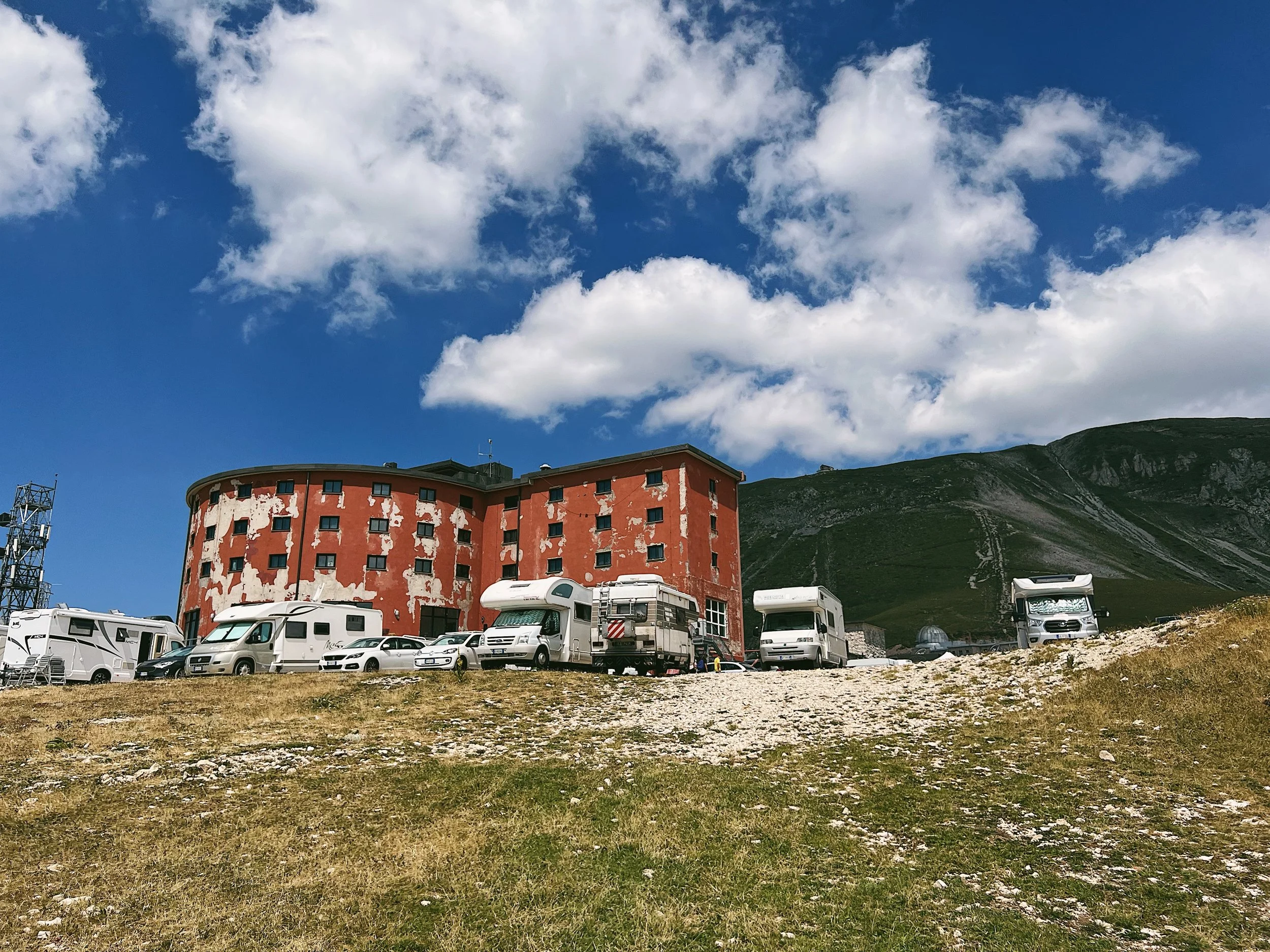
Campo Imperatore has an interesting history. It forms part of Italy’s oldest alpine ski resort, which started in the 1920s and is connected to the town of Fonte Ceretto by an enormous gondola. The winter skiing infrastructure is limited: aside from the gondola, there are just two chairlifts, a tiny drag lift and about six relatively short and uncomplicated pistes, with a couple of variations - none of which offer much variety. One reason that people come up here, often for the drive alone, is to see the Hotel Campo Imperatore. The former Albergo Amedeo di Savoia Duca d'Aosta was built in the 1930s and now lies in a state of near-total abandonment, its crimson walls peeling and the interior shabbier still - though it is apparently undergoing refurbishment. The hotel is known best as the former prison for Benito Mussolini - who was held in the building from 28 August to 12 September 1943 before being liberated by German paratroopers. Fascism is alive and well in some corners of Italy, and you may encounter some eyebrow-raising Mussolini sympathisers visiting Campo Imperatore to see where “the Great Man” was freed. The room where Mussolini was held has been preserved as a museum and it’s possible to stay there overnight - should that be an exciting prospect to you.
Flora and fauna
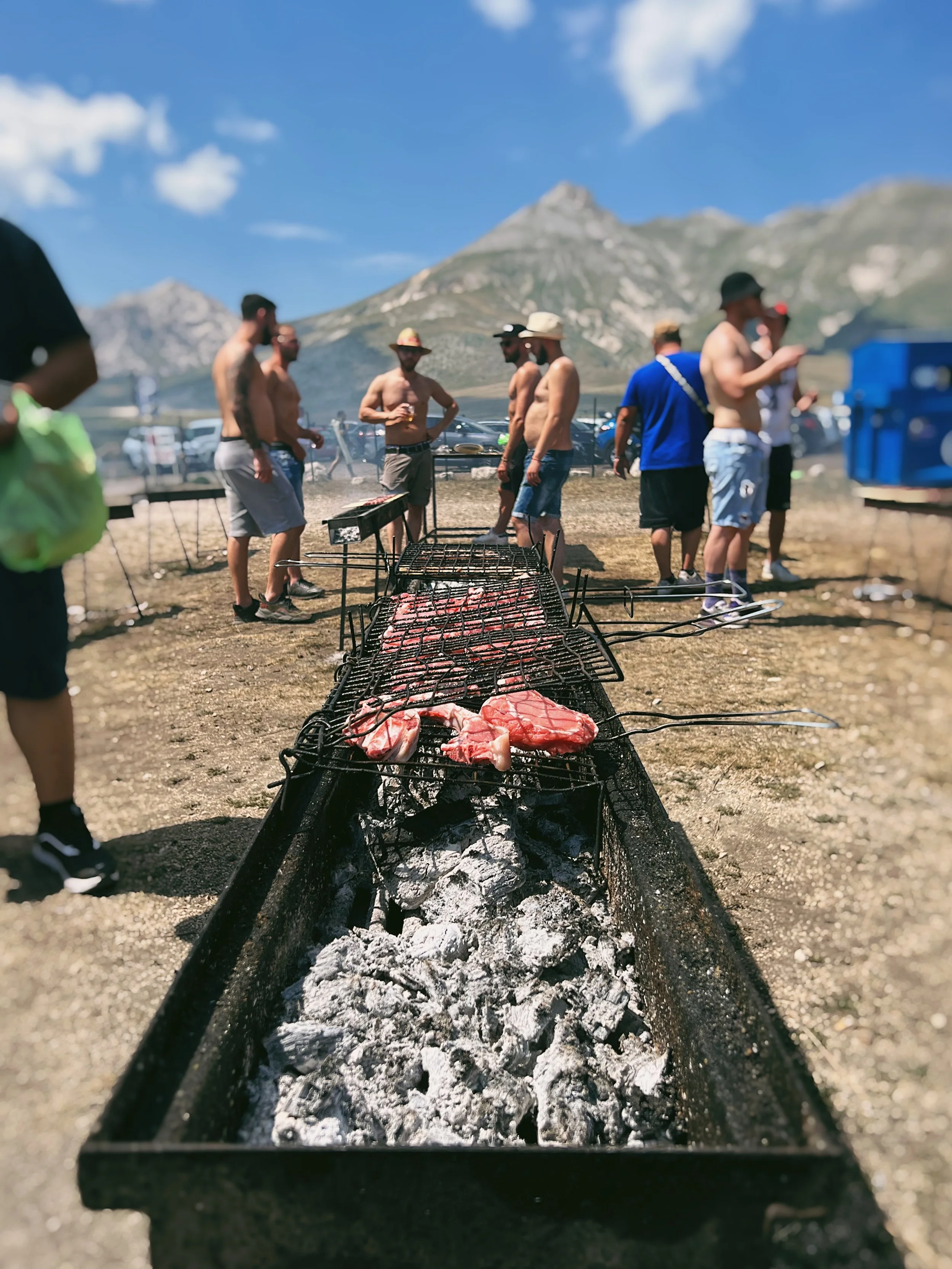
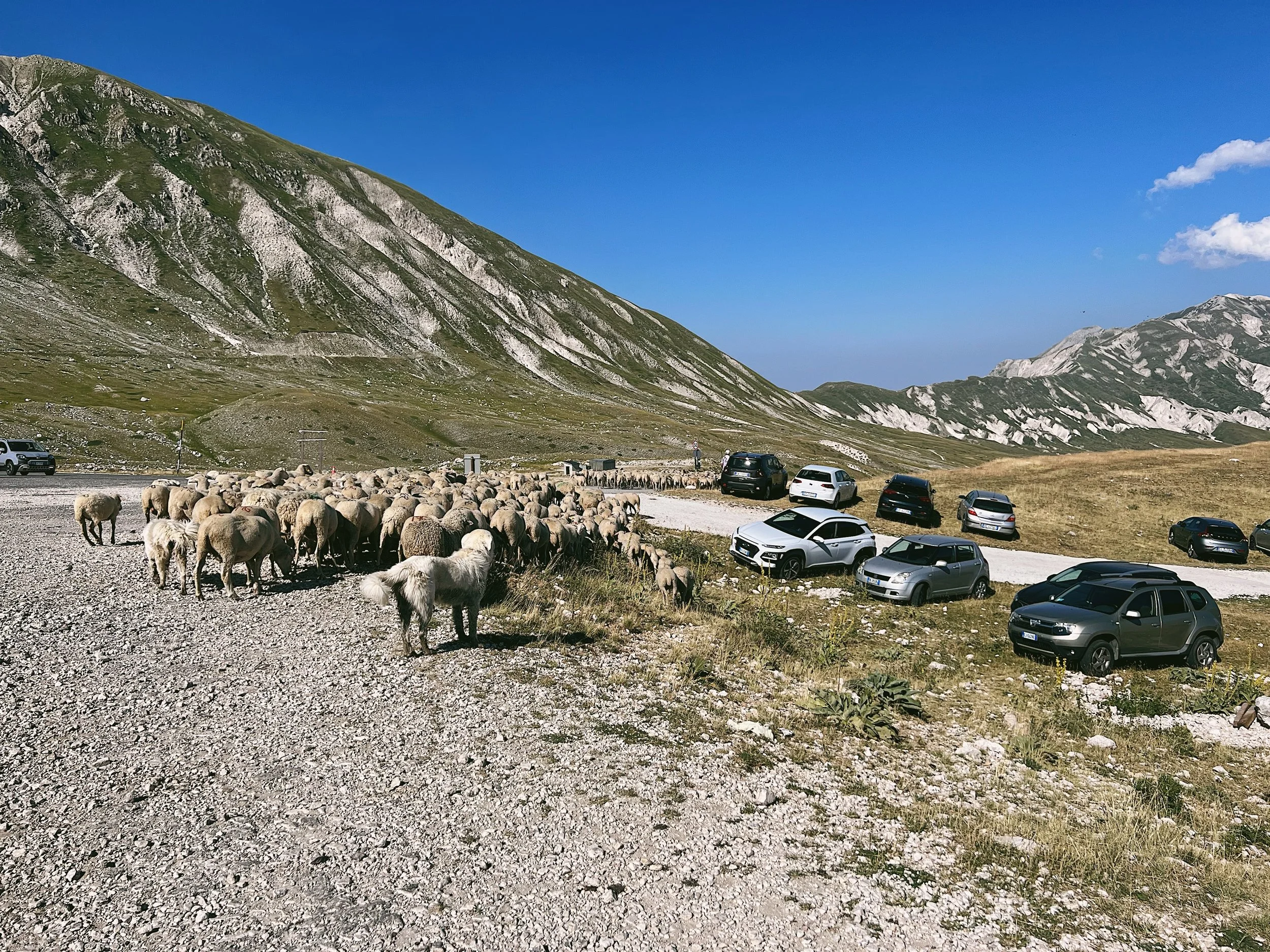
If pizza is the food of Naples, arrosticini are the food of Abruzzo: this explains the thousands of sheep that graze the plateau. For variety, there are cows and horses too. You’re unlikely to see many wild animals on this hike as it’s well trafficked, but there are chamois, roe deer, Apennine wolf and many species of bird: golden eagles, alpine choughs, tawny pipit and rock sparrow. The protected area of the park has more than 2,400 species of plant, with 12 found only in Gran Sasso. Above the tree line, plant life is scarce but there are beautiful wildflowers in the spring. The wooded areas are planted with oak and chestnut forests planted originally by the Romans, plus beech, yew, holly, maple, ash and elm. There are also many wild blueberries.
How to get there and parking
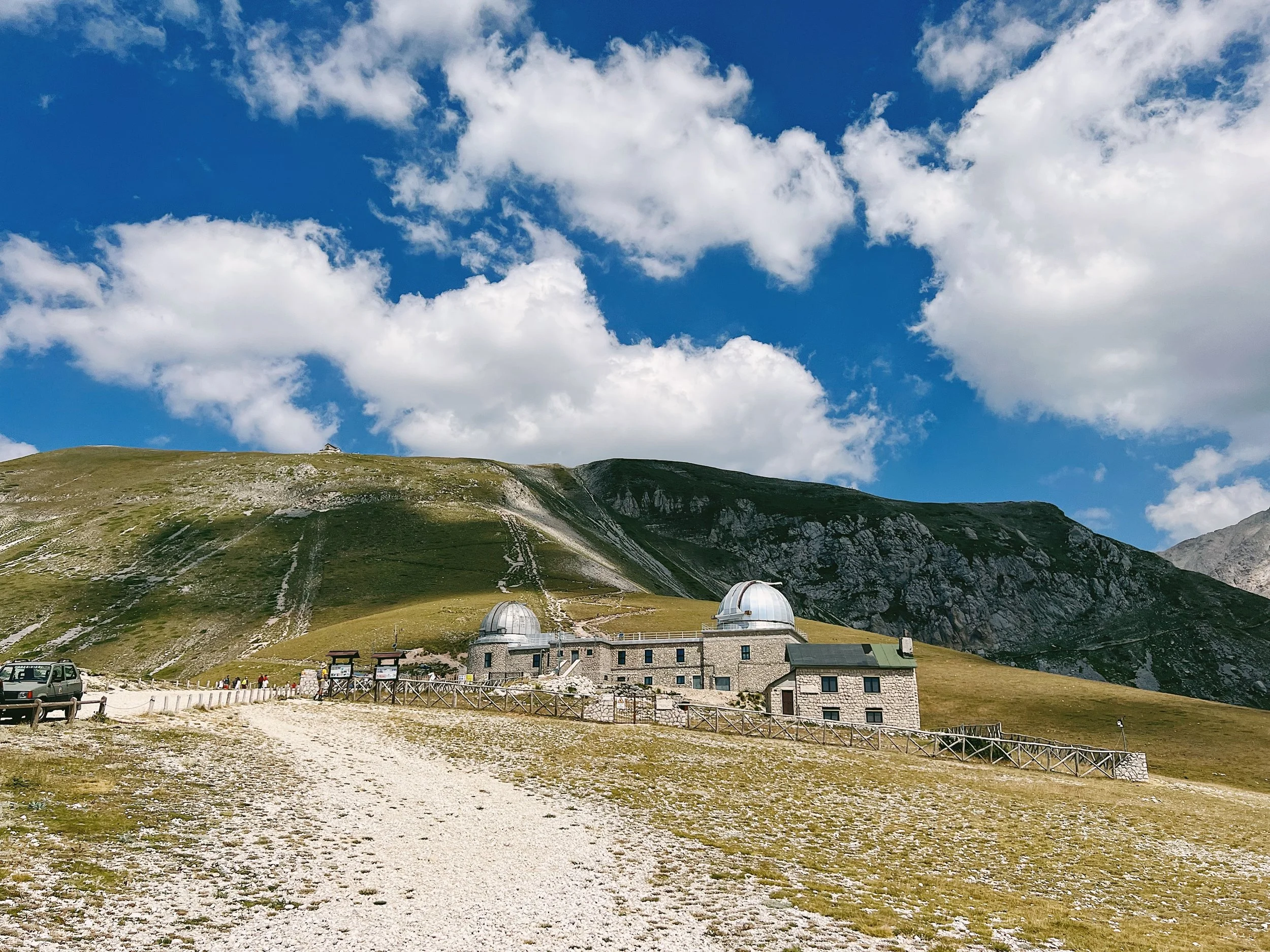
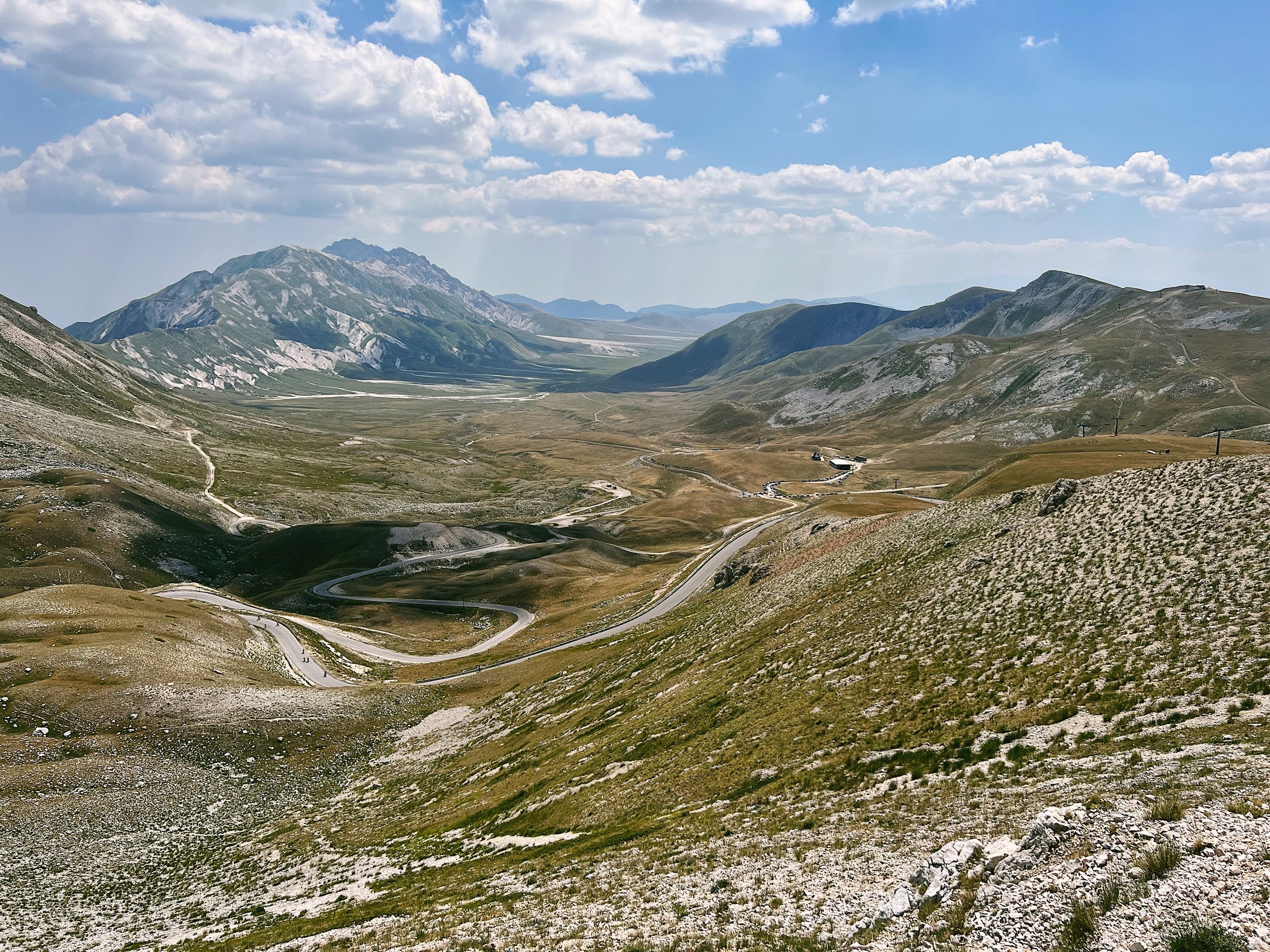
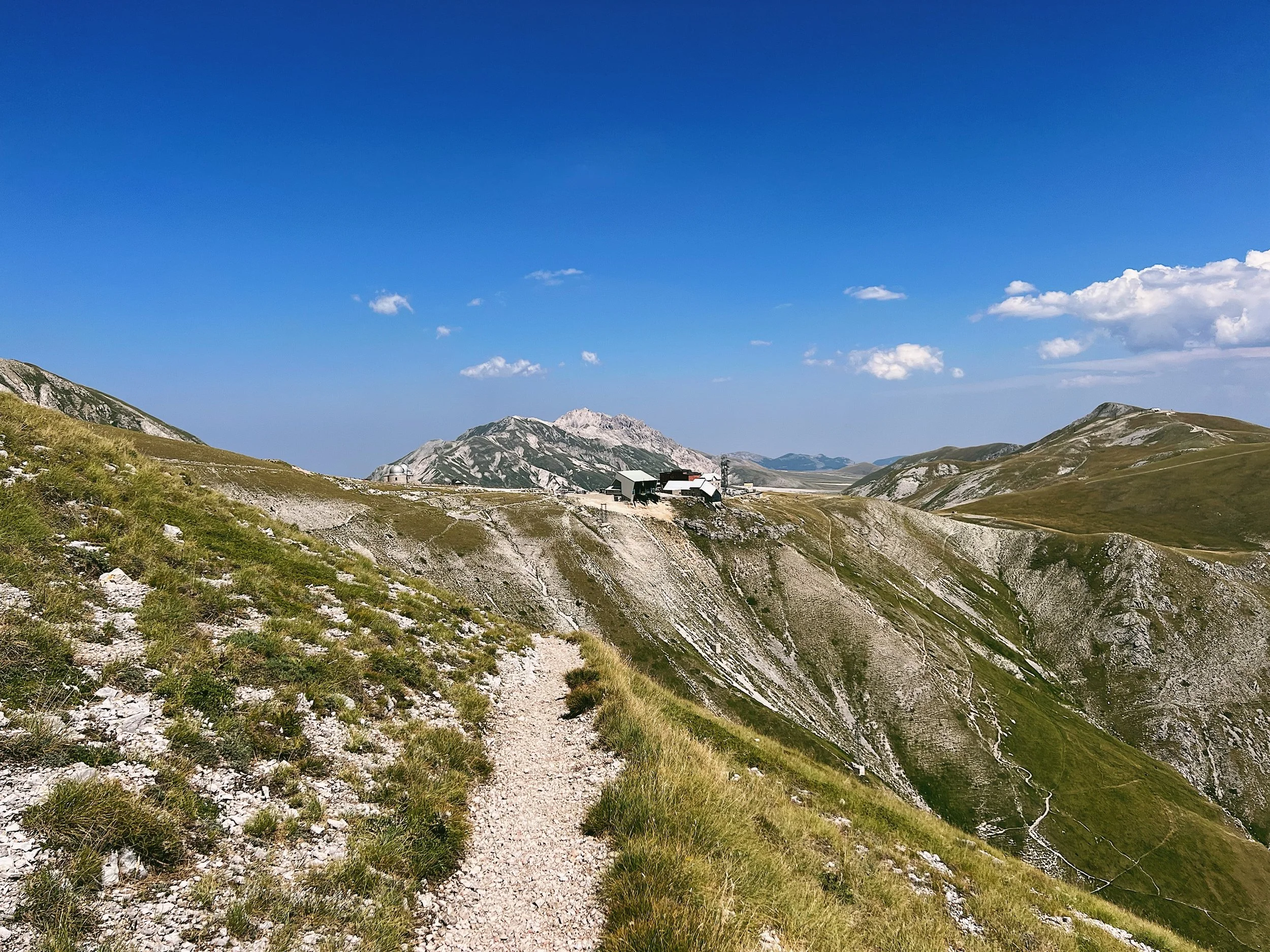
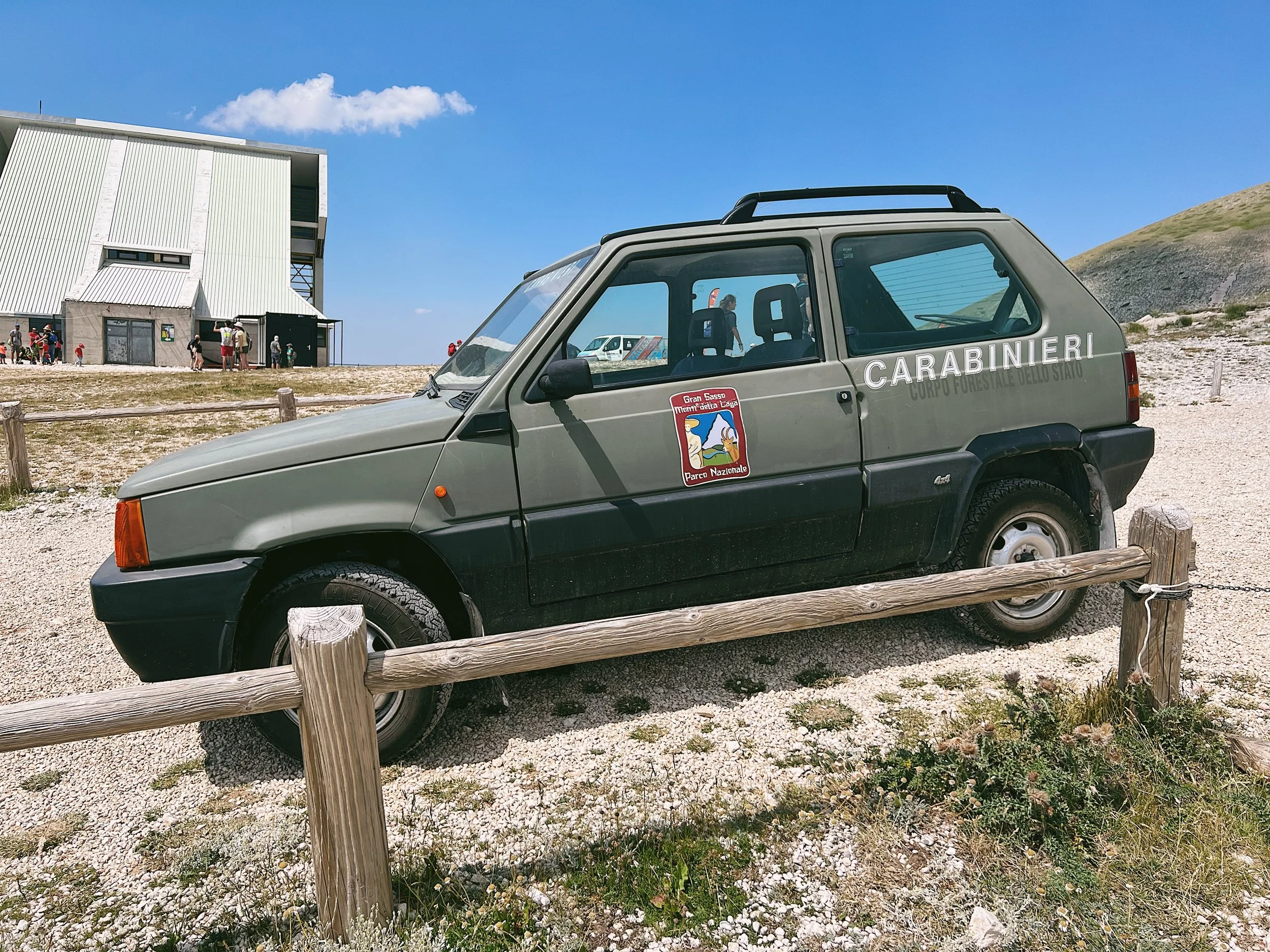
The road up through Campo Imperatore is one of Southern Italy’s best driving roads, winding up through a wide, open plateau in a series of gentle switchbacks, passing free-roaming cattle, sheep and horses. The final part of the road ramps steeply up to a dead end, where there is an observatory, a botanical garden, a hostel, an abandoned hotel and two arrival stations for ski lifts: a large gondola which arrives from Fonte Ceretto and a chairlift which comes up from the plateau below.
There are two main parking areas: at the end of the road, next to the botanical garden, or a short distance below the final uphill section of the road in a gravel layby which becomes a very Southern Italian (read: unofficial) parking area on weekends and during the very busy summer season. It costs 5€ to park here (cash only, of course) and you can either take the nearby Fontari chairlift up to the start of the hike or walk; this adds about 20 minutes and 1.5km onto the start - it’s steep.
Signage and trails
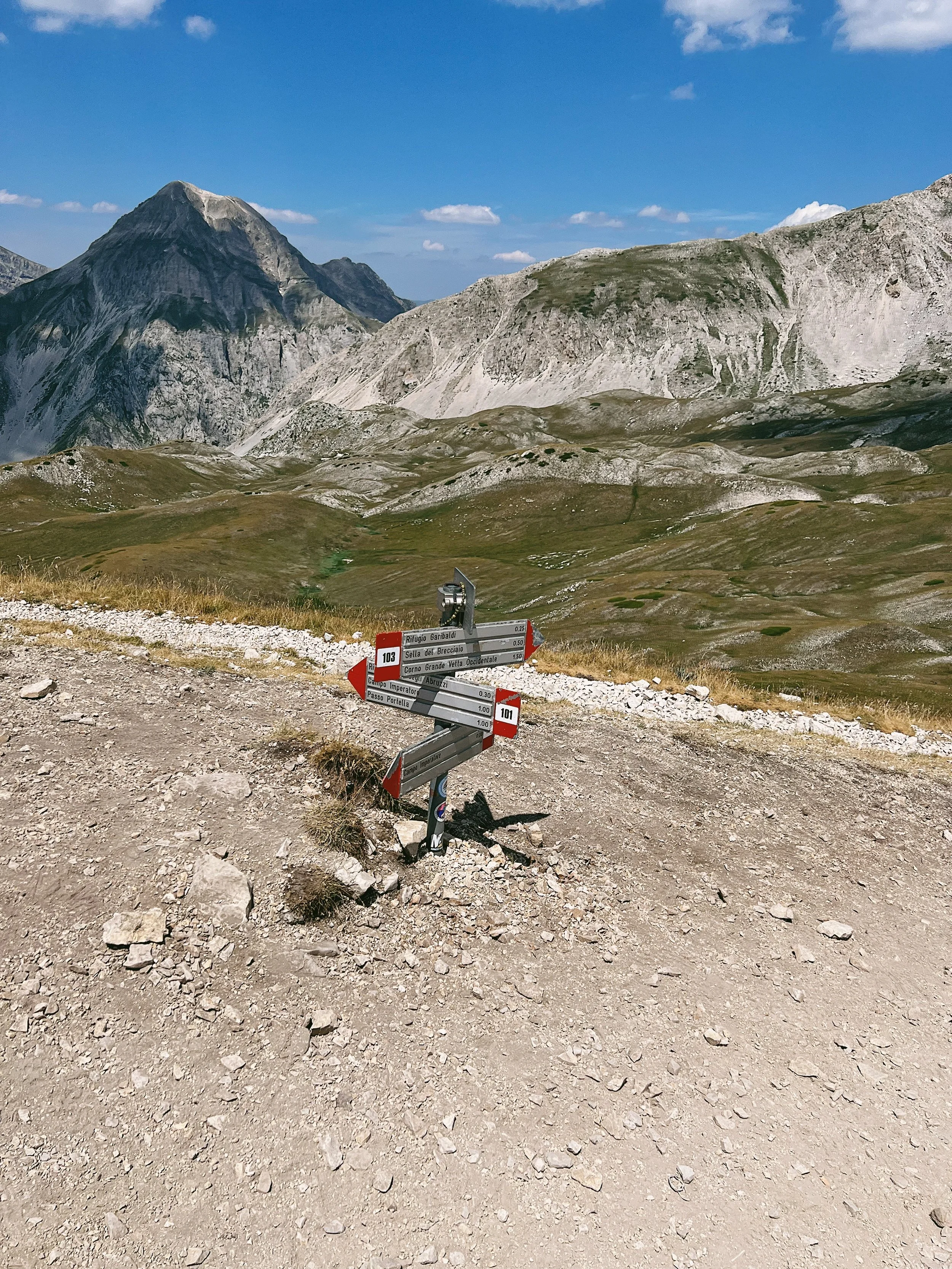
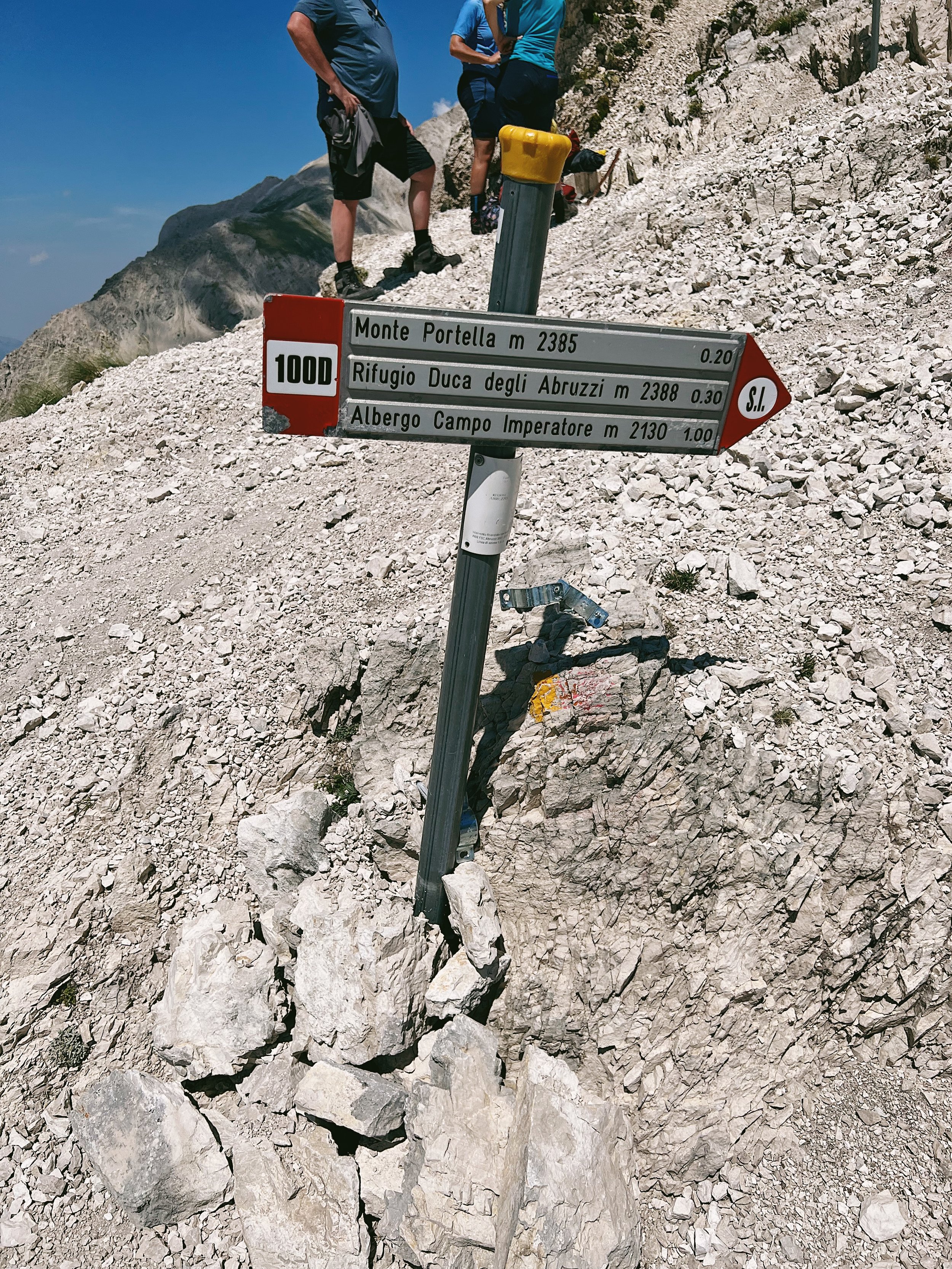
The route is very well marked by CAI signposts which give approximate elevation and timings - most of the route is the CAI 100/101. The Corno Grande route also takes in the 103. There are the usual CAI red and white spray-painted markers on rocks along the route for reassurance. Plus, the landscape is so open you can see for miles: it would be hard to get lost.
The trails are not as straightforward, and there are a number of sections which have been poorly maintained and have badly deteriorated, causing small but frequent rockfalls. There are signs everywhere asking people to remain on the main paths, so ensure you keep to the marked trails only to avoid further erosion.
Route
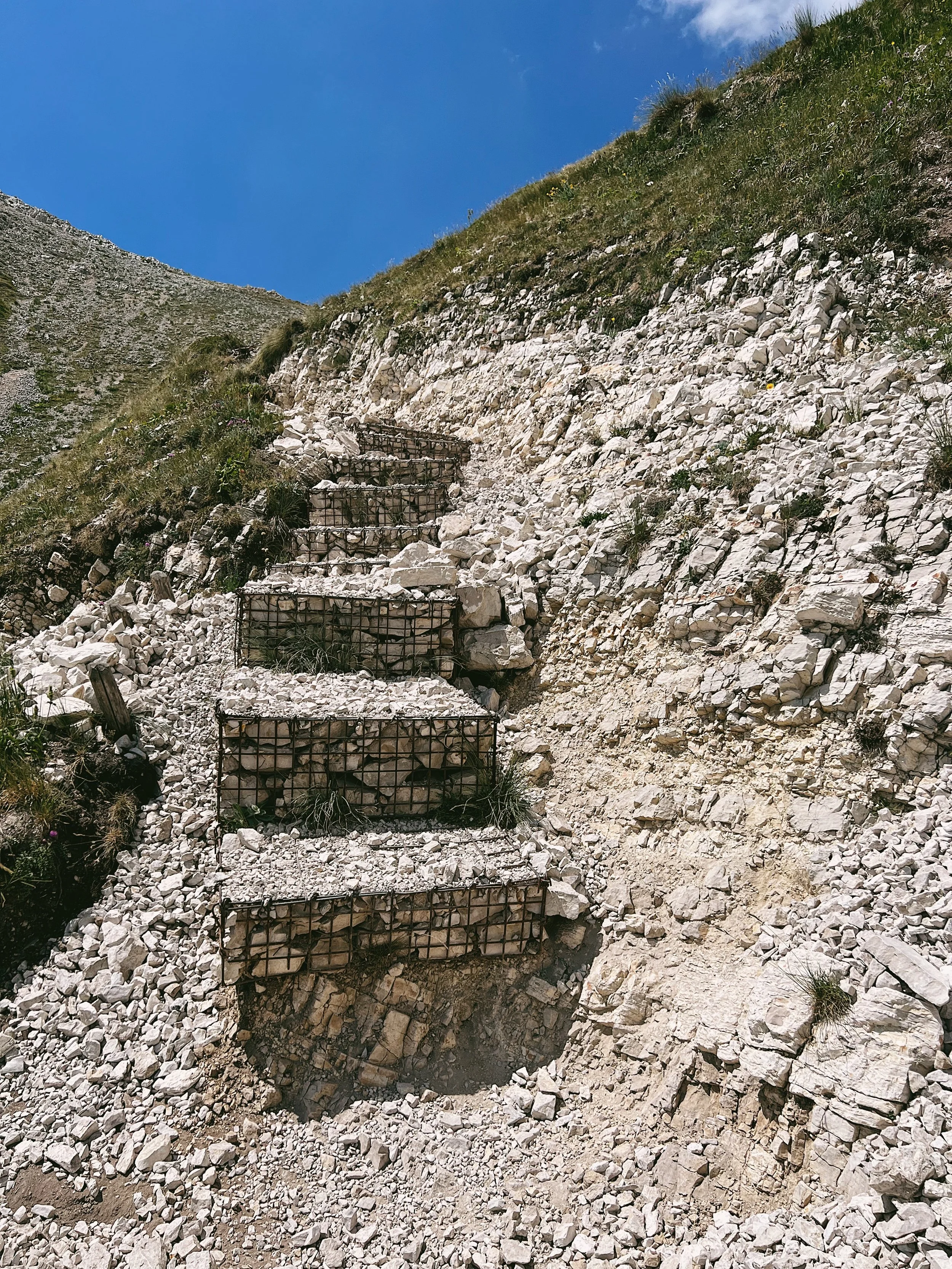
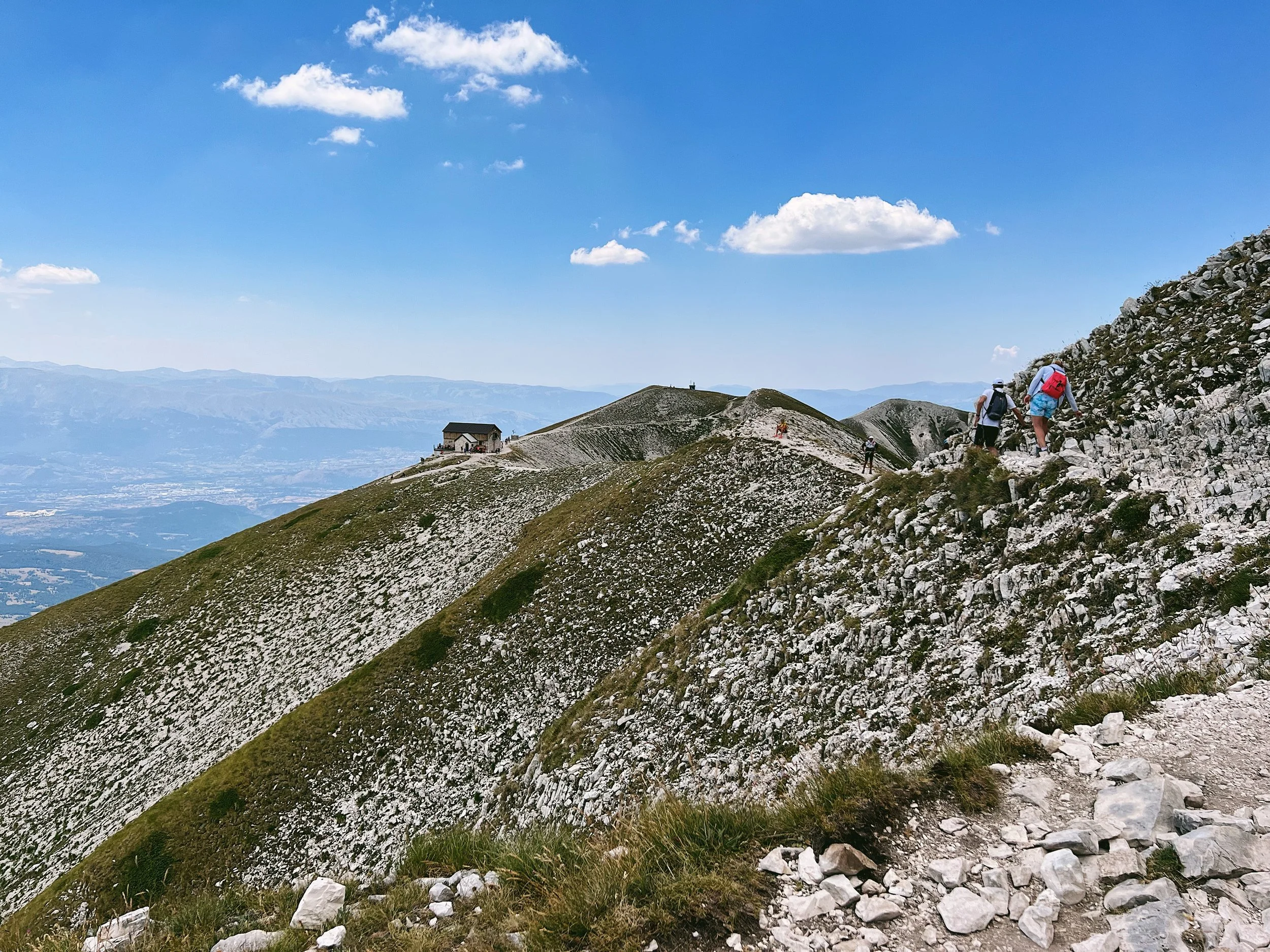
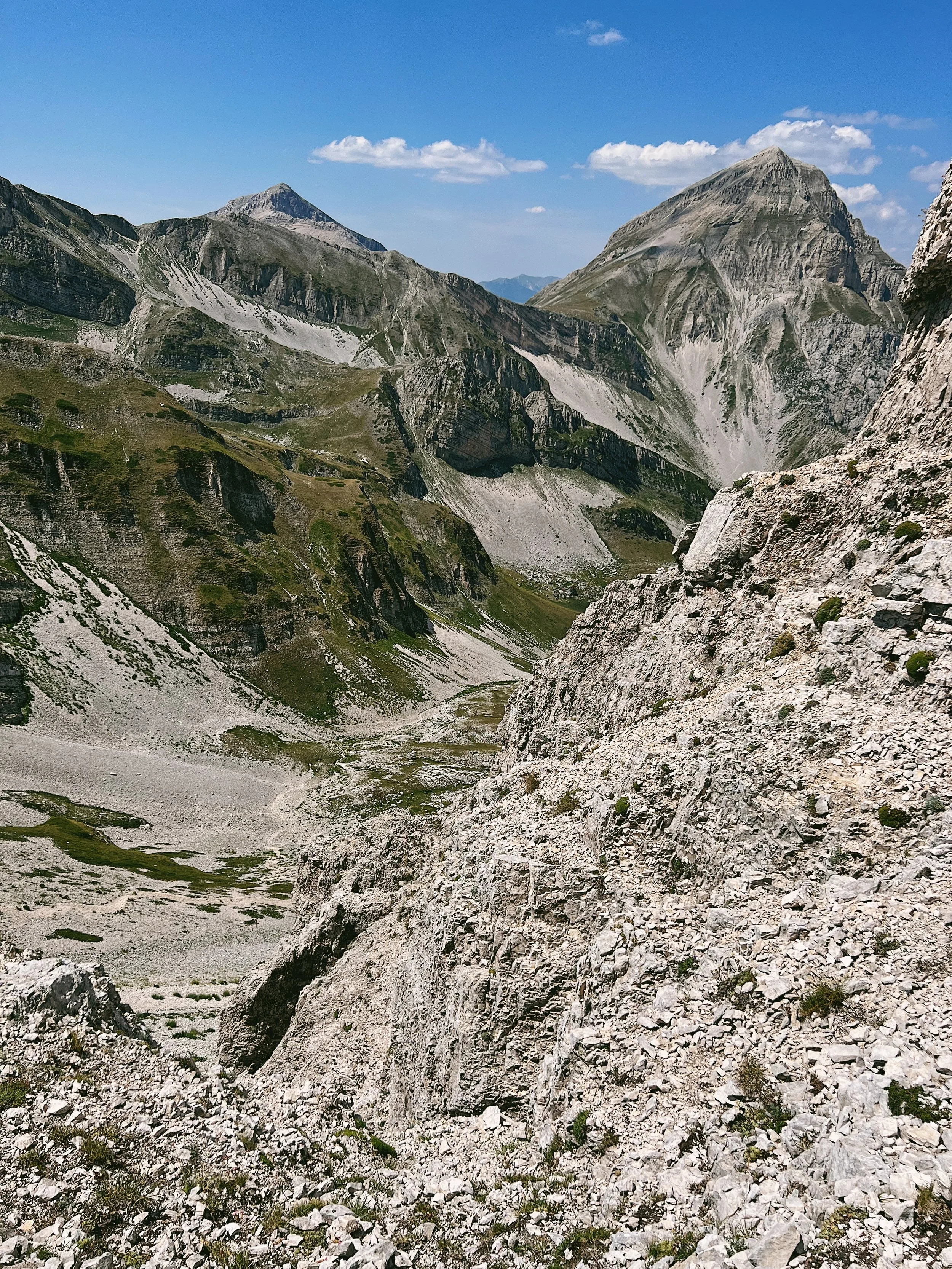
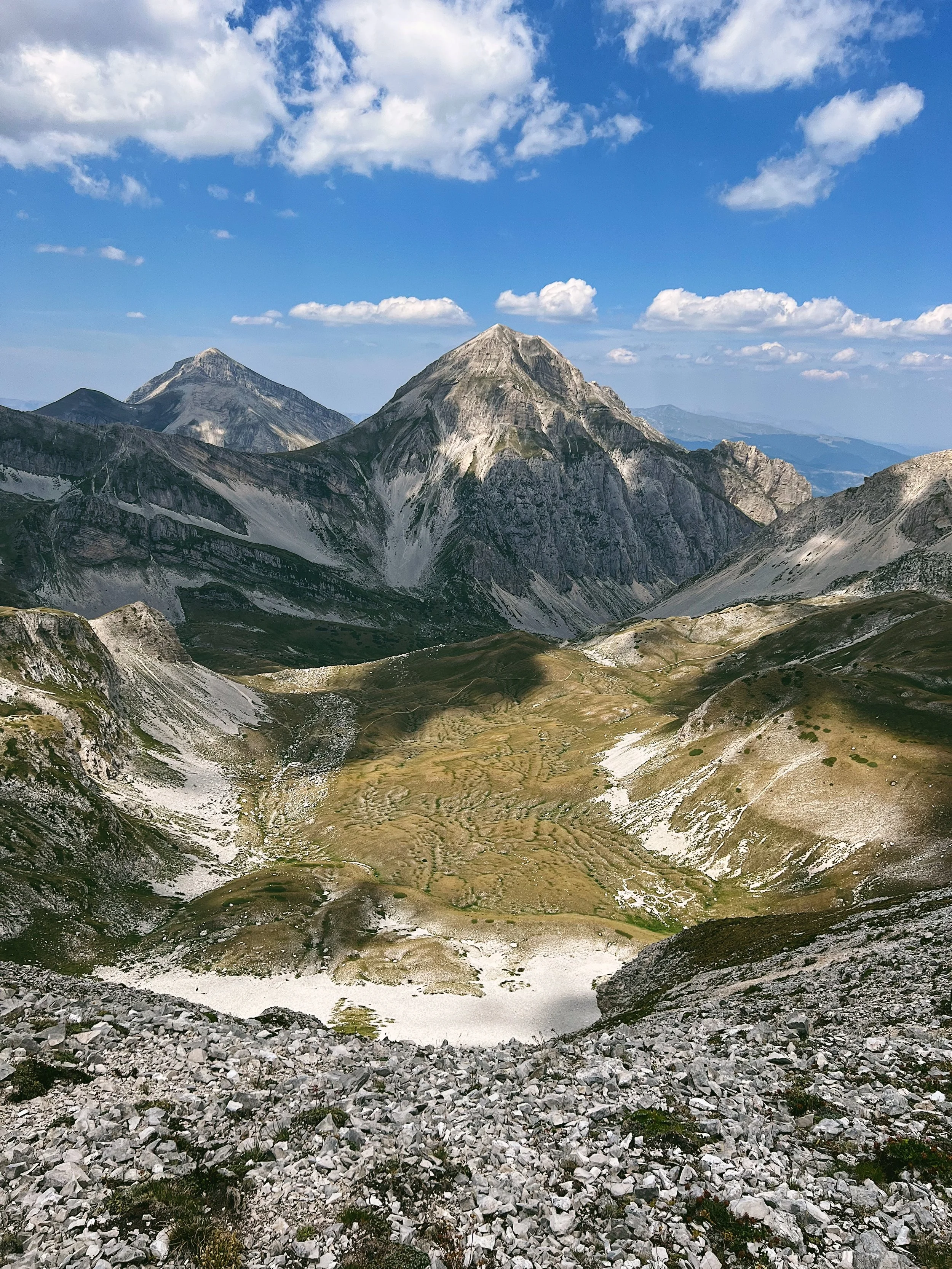
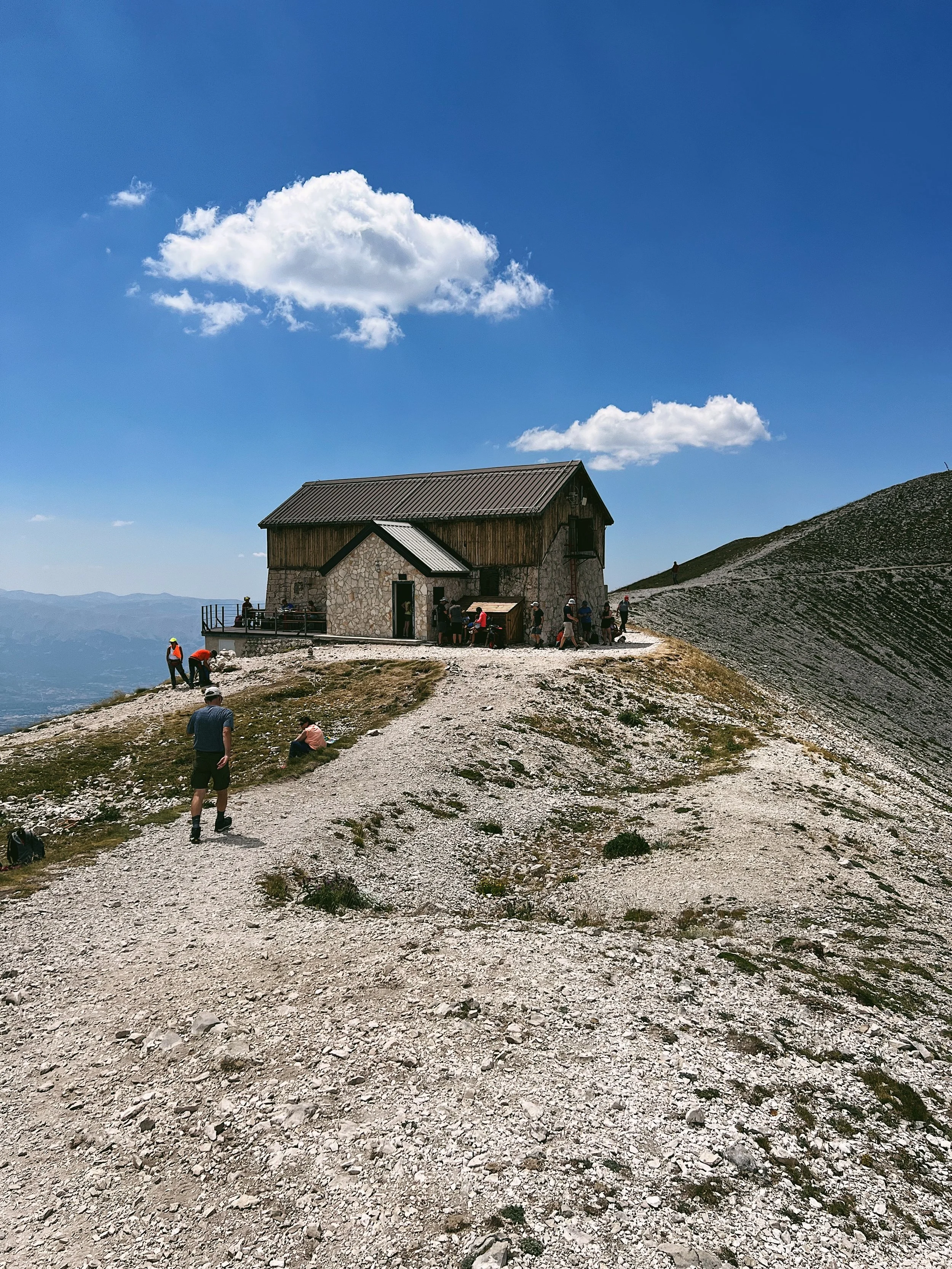
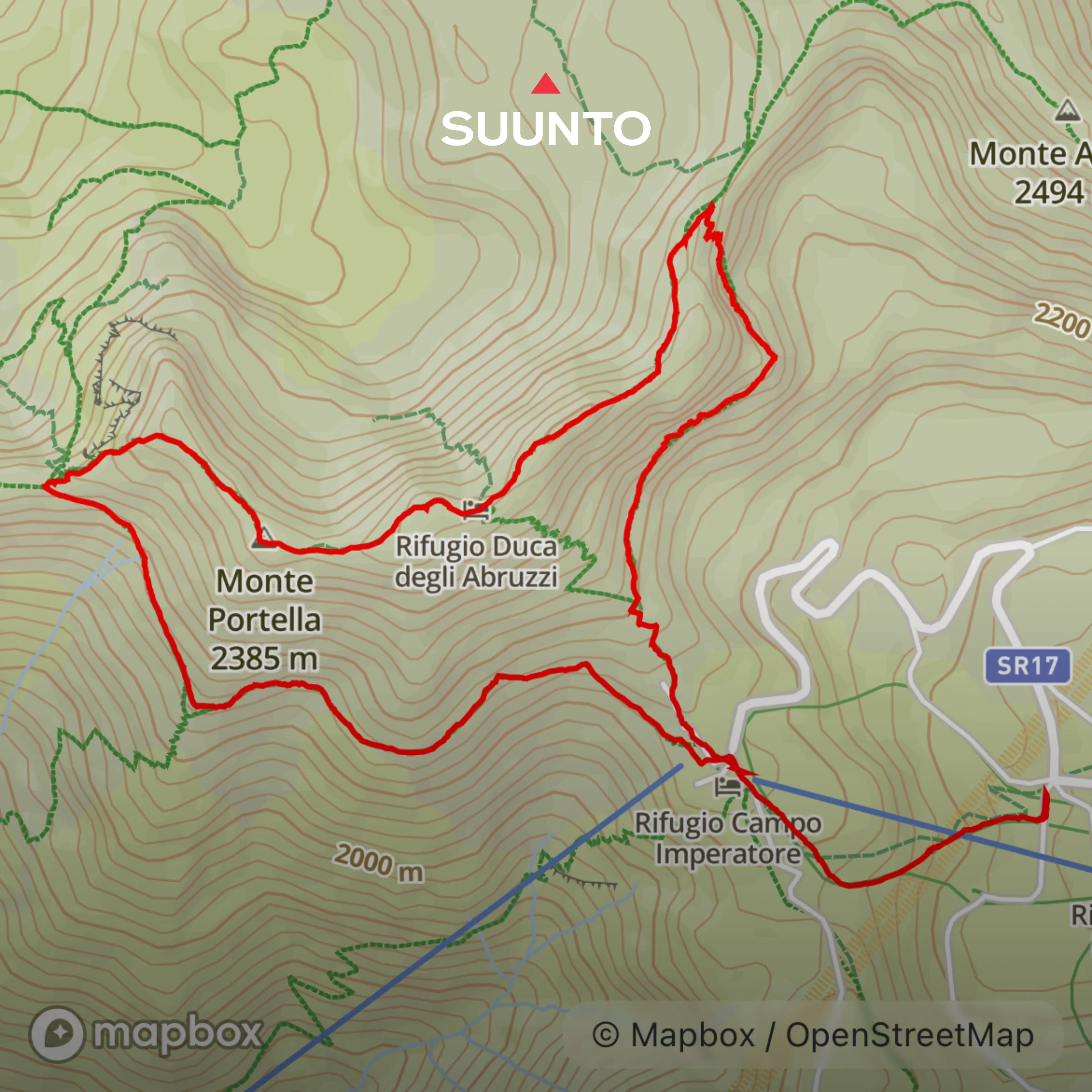
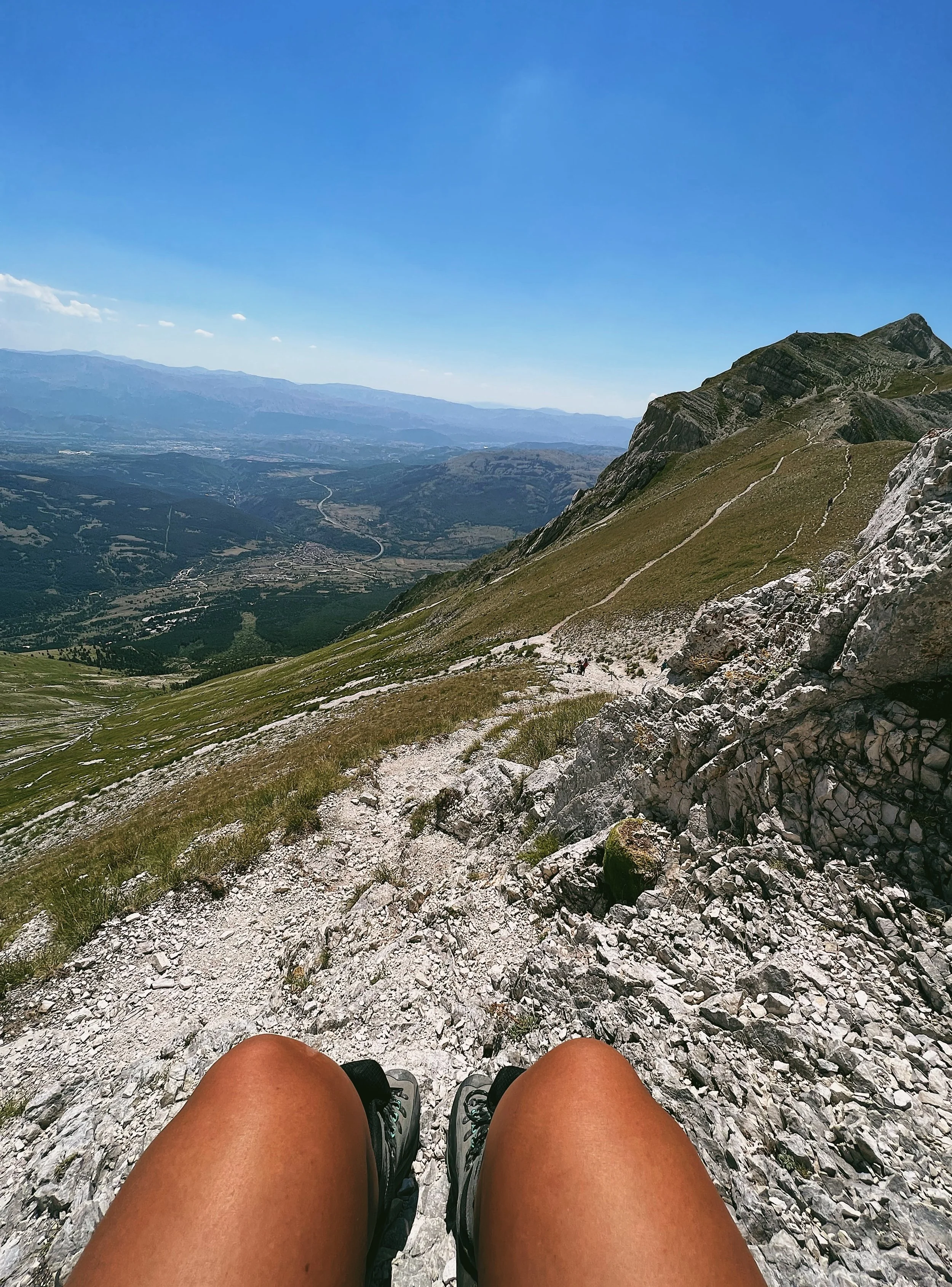
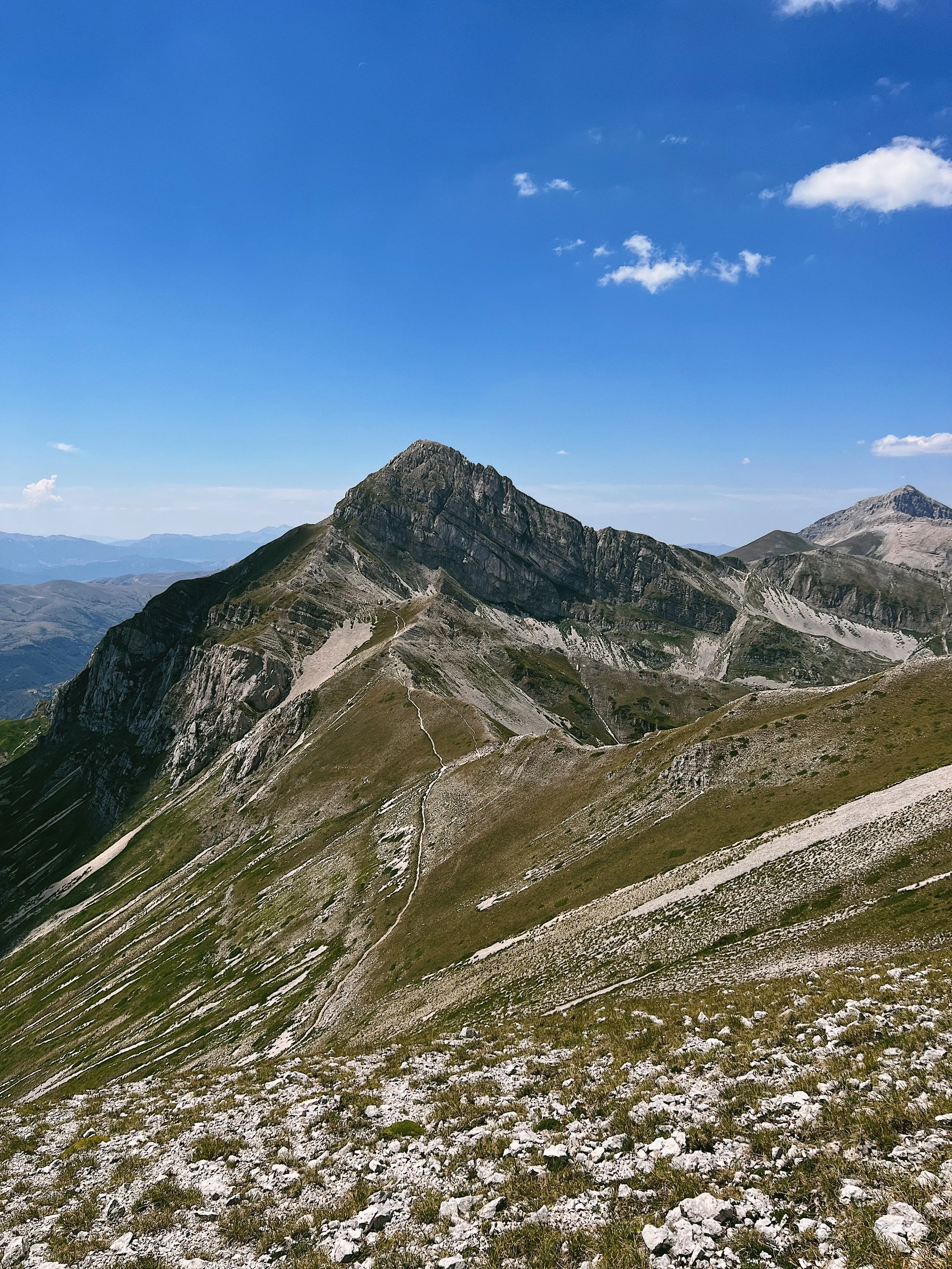
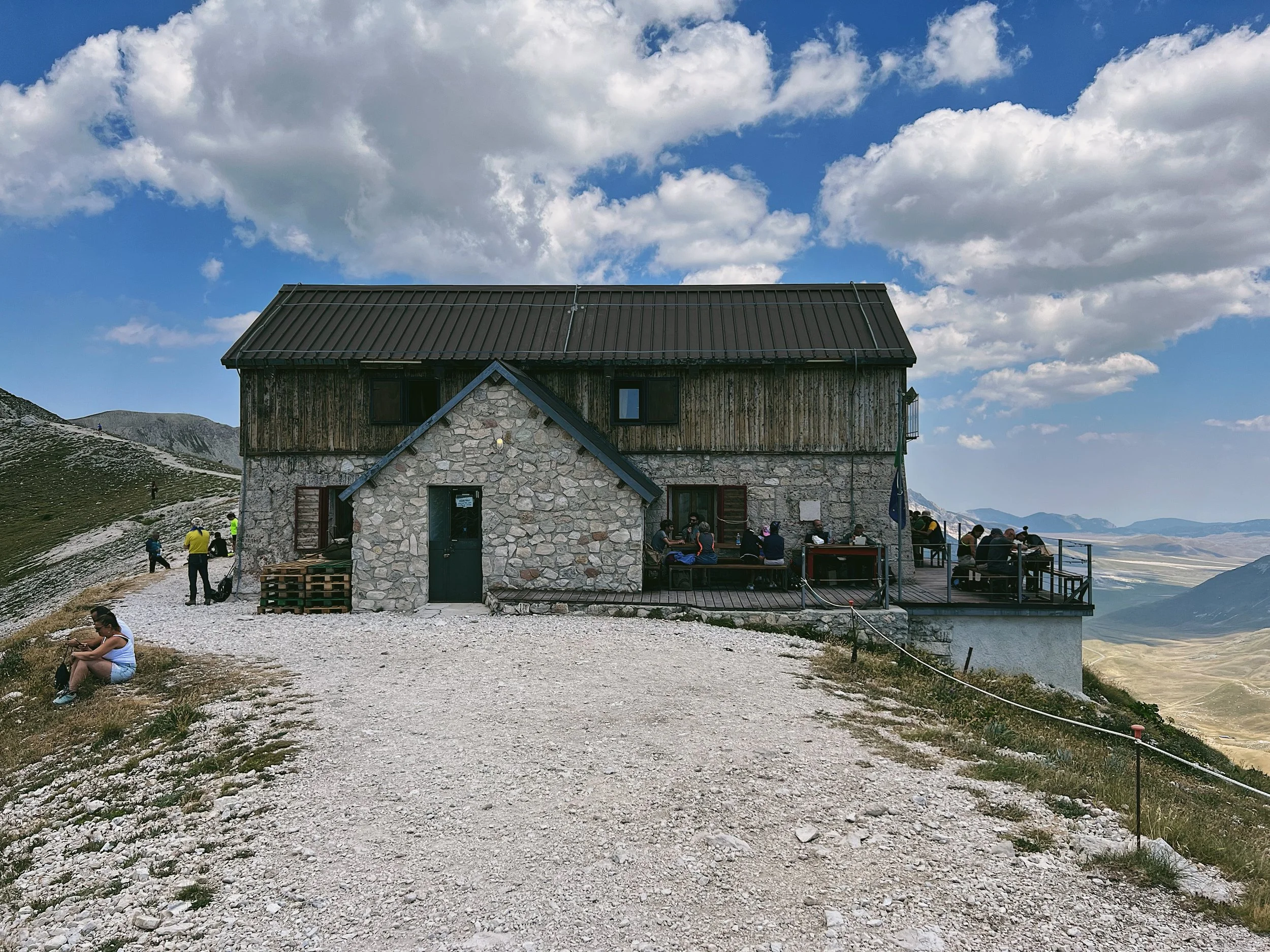
Start at the plateau, facing the observatory. There is a clearly defined path rising up the mountain in a series of zigzags. With the botanical garden and the observatory on your right, head uphill following the first couple of switchbacks and after 200 metres take the right-hand fork and follow the path uphill. The path is straightforward until the last 100 metres, when it becomes steep and there is occasional rockfall from above. There are stone ‘gabion’ steps to make the climb easier. When you reach the crest of the ridge there is a stunning view across the natural bowl below, towards Corno Grande. You have choices here: turn right to climb Corno Grande or Monte Aquila (see the harder option, below) or turn left to follow the standard route. The path crests the ridge and then drops down to the north side before popping up again just before Rifugio Duca degli Abruzzi on Cresta di Monte Portella.
Passing the rifugio (after stopping for a pick me up) continue straight on the well-established path, going up and over Monte Portella before continuing on the undulating path. After a short while, the path slopes downwards, often steeply, until it reaches Passo della Portella where several paths meet. Turn left to continue downhill, as if you are going back on yourself, but on a lower level. The path splits at one point - take the upper path, as the lower one heads sharply downhill to Fonte Cerreto. The dome of the observatory will come into view and the path then emerges back onto the plateau, passing to the left of the gondola station.
The family-friendly option - 3km / 275m d+
The above route is not suitable for young children and we did see a group of people being admonished by guides for attempting to bring babies and kids - in flip flops, no less - up the more technical section. They did eventually turn around. There is, however, an alternative route which can be accessed by younger hikers and those who aren’t keen on heights or technical terrain. Beginning at the same place, instead of forking right towards Monte Aquila, continue straight up the switchbacks until you reach the ridge and Rifugio Duca degli Abruzzi. Some caution is needed if the trails are wet or if there is snow on the ground, but it’s a much easier alternative and you can still enjoy the beautiful 360-degree views, have a drink and a snack at the refuge and soak up the mountain air, before returning the way you came up.
The harder option - 15km / 900m d+
For seasoned hikers with climbing experience, it’s possible to summit Corno Grande from Campo Imperatore. Follow the route above until you reach the top of the ridge, and instead of turning left, turn right and when the path forks, take the left-hand path downhill (the path to the right ascends Monte Aquila, also doable). Follow the path downhill and across one side of the natural bowl (Conca dell’Oro) formed by the surrounding mountains. Ignore the turning left to Rifugio Garibaldi and continue on the same path which now climbs uphill across scree and rocks, with a via ferrata area in front of you. The only way is up from here: keep climbing the distinct and well-marked path uphill, through increasingly more technical terrain (there are some cables), across the face of the slope and around the back of a large outcrop of rock. You will now be able to see the route to the summit and possibly the rather sad and depleted Calderone Glacier, depending on its condition. Continue up to the summit, where there is a cross at the top and a small amount of space to take in the view. Return the same way. I would strongly recommend bringing a climbing helmet for the later section as there is very frequent rockfall with stones of various sizes being dislodged by climbers from above. Other routes require, at minimum, being roped in, so stay on the main path and avoid any detours.
Food and drink
You are on a high mountain plateau here, so infrastructure is scant, but there are still options for lunch. At Campo Imperatore itself there’s a highly-rated hostel, where you can stay overnight in the structure that housed the old cable car, the abandoned hotel that once housed Mussolini, and in the summer months, a selection of food trucks doing a roaring trade in beer, coffee, arrosticini and various sandwiches. On the walk itself there is Rifugio Duca degli Abruzzi, which serves hearty mountain food like lamb with polenta. Don’t get excited by the signs for Rifugio Garibaldi, which is a mountain shelter and isn’t staffed.
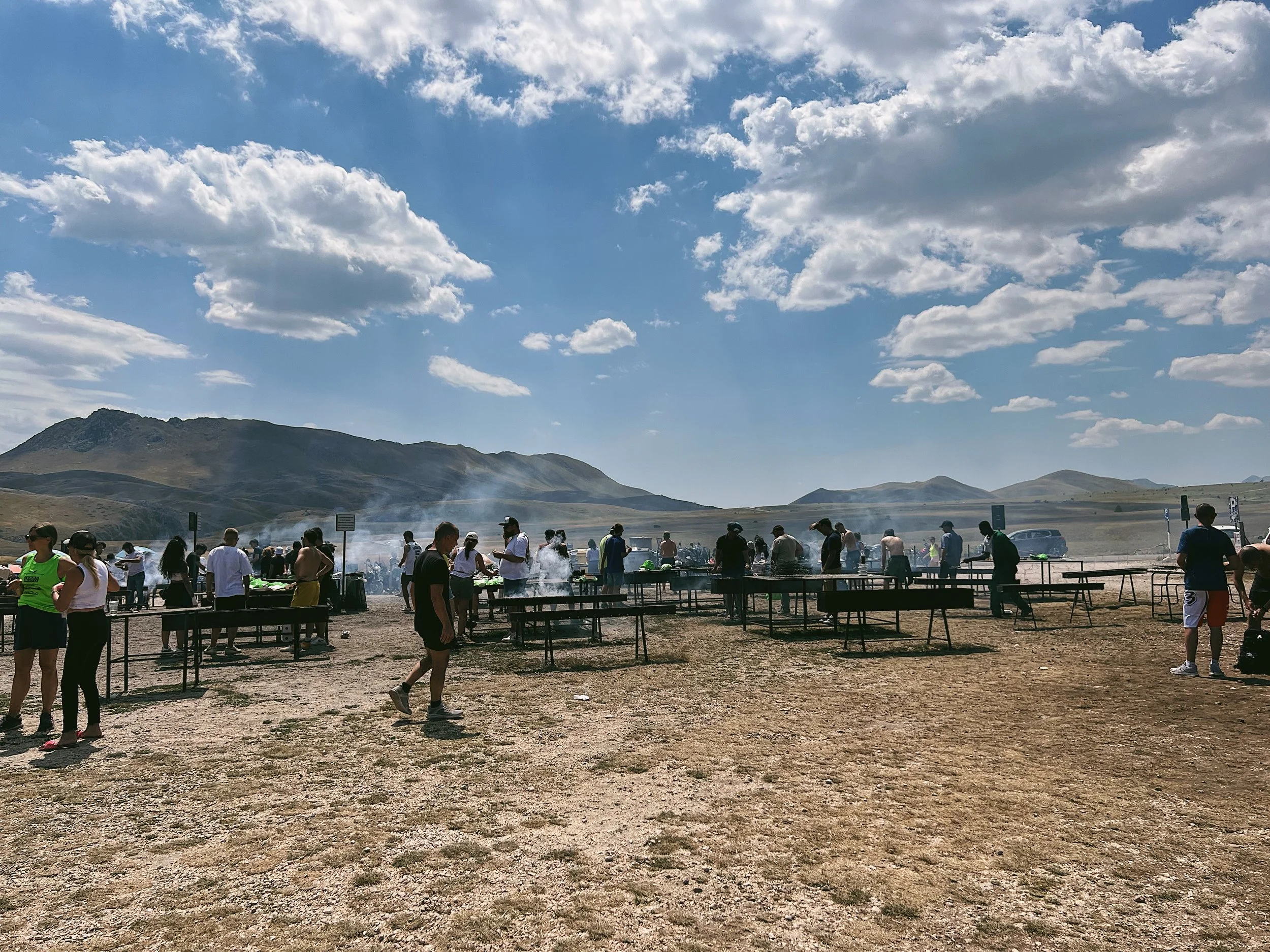
The highlight of Campo Imperatore, and one of my favourite eating experiences in Italy, is about 20 minutes’ drive away, lower down on the plateau in the area of Castel del Monte. It’s a modest wooden structure set on the bend in the road, with hundreds of freestanding barbecues outside. There are two queues: one for meat, which is raised on the surrounding plateau, and one for everything else (pecorino cheese, bread, wine - again, all local). There are enormous queues on summer weekends so get there either early or late and be prepared to queue, with water. Bring condiments and anything else you deem essential to a barbecue. It’s great fun, dirty, sweaty and hot, and I guarantee there will be very few, if any, other non-Italians.